

KAMPALA HEADTEACHERS URGED TO LEAD FROM THE CLASSROOM
PUBLISHED — 27th, February 2026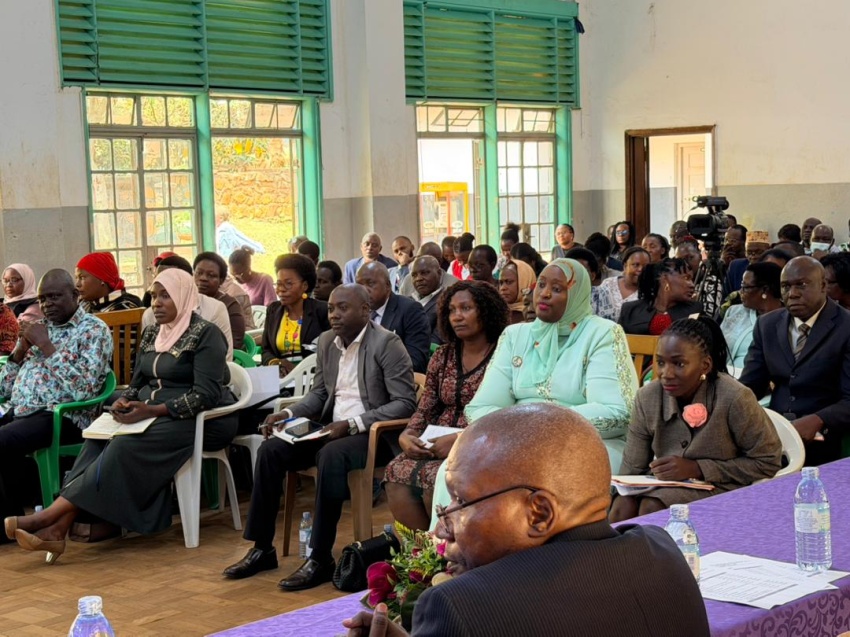
The Minister of State for Primary Education, Moriku Kaducu, has rallied headteachers of public primary schools in Kampala to take bold ownership of reforms aimed at improving learning outcomes and reducing school dropouts.
Speaking during a meeting held Friday at Nakasero Primary School, Kaducu commended teachers and school leaders for their commitment but urged them to move from discussion to action.
“We are here to find solutions to our challenges,” she said. “If we don’t get our own solutions, who will?”
The minister emphasized the government’s shift toward competence-based learning, saying the focus must now be on equipping learners with practical skills and identifying individual talents rather than concentrating solely on examinations.
She thanked educators for supporting the president’s mission of delivering quality education for all, anchored on an inclusive agenda that seeks to leave no child behind. Ensuring access to education for every learner, she noted, remains a central government priority.
Kaducu raised concern over the country’s high school dropout rates, saying that while Kampala’s rate stands at about 20 percent, some districts record figures as high as 70 percent.
“This is not just a statistic. These are children whose futures are at stake,” she said, urging school leaders to strengthen retention strategies within their communities.
Kampala Capital City Authority (KCCA) officials echoed her message, calling for stronger instructional leadership across public schools.
Cleophas Mugenyi the Commissioner Basic Education, told headteachers that the education system cannot rise above the quality of its teachers.
“Any headteacher who does not teach is not worth their job,” he said, urging school leaders to lead from the front by teaching at least six lessons per week.
He called on headteachers to prioritize classroom presence over administrative comfort.
“Lead from the class, not the office,” he said, adding that school leaders should report to work by 7 a.m. and enforce zero tolerance toward absenteeism.
Mugenyi stressed that leadership is a service and reminded educators that the children under their care today are the country’s future leaders.
KCCA Director of Education and Social Services Charles Maginot highlighted infrastructure gaps within the capital, revealing that out of Kampala’s 99 parishes, 51 do not have a government primary school.
He also pointed to high pupil-to-teacher ratios in public schools as a persistent challenge affecting quality.
The meeting concluded with a renewed call for strong instructional leadership, accountability and innovation within schools as Kampala moves toward competence-based education reforms aimed at improving quality and expanding access.
By Geofrey Mutegeki Araali
Communication and Media Relations Officer
News & Announcements
16th, April 2026
15th, April 2026
15th, April 2026

12th, April 2026

11th, April 2026

10th, April 2026

2nd, April 2026
2nd, April 2026
1st, April 2026
31st, March 2026









Development partners