

VENDORS IN CITY MARKETS RALLY STREET TRADERS TO RELOCATE
PUBLISHED — 17th, February 2026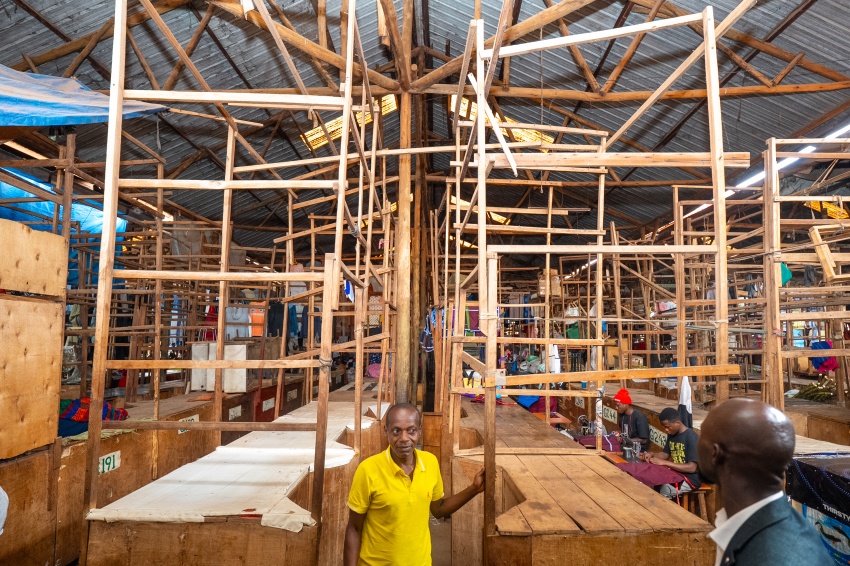
Traders operating from gazetted city markets have urged their counterparts on the streets to relocate to available stalls, saying government has already invested heavily in organized trading spaces that remain underutilised.
At Busega Market, vendors said there is ample room for those currently selling along roads and walkways.
“We want more traders to come and join us,” said Nalwanga Lwanga, a vendor at Busega Market. “We cannot let the President who built this market down. We are here and there is space. People should not remain on the streets when stalls are available.”
Sekiranda Kizito, another vendor at the same market, thanked President Yoweri Museveni for supporting the construction of modern markets and invited street traders to occupy the vacant spaces.
“Busega is a big market. Majority of the people trading on the streets are welcome because the spaces are here,” he said.
At Usafi Market, Kalema James echoed the call. “Many people should come and take up the stalls. The markets were built for us. There is no reason to struggle from the roadside,” he said.
According to Moses Musimire, Supervisor of Market Development at Kampala Capital City Authority (KCCA), Usafi Market alone has capacity for 3,000 vendors but only 1,600 are currently registered.
“We can provide space for street vendors and these particular spaces are free. KCCA does not charge for them,” Musimire said. “The allocation committee is ready and already processing applications.”
He explained that some stalls had been abandoned by previous occupants.
“The law is clear. If you abandon a stall for three months, we are free to reallocate it to another person,” he said, adding that at least 300 vendors have so far applied for the vacant spaces.
At Kamwokya Market, KCCA has identified an open section with at least 250 available trading spaces ready for immediate allocation.
KCCA spokesperson Daniel Nuwabine said the authority has conducted thorough assessments to confirm the availability of space in both public and private markets across the city.
“We call upon all street vendors to occupy these available spaces,” he said. “We are determined to enforce regulations against street vending. Allegations that KCCA officials collect money to allow vendors to operate on the streets are not true.”
Nuwabine warned that enforcement of government directives requiring vendors to vacate illegal trading spaces will begin on February 19, 2026. Those who decline to relocate risk arrest.
KCCA says it has identified 2,520 vacant spaces in its 17 public markets and at least 1,980 additional spaces in 69 private markets. The authority has also engaged neighbouring municipalities to widen relocation options. Allocation will be on a first-come, first-served basis.
Across parts of the central business district, vendors have been operating directly on pedestrian walkways, spreading merchandise on tarpaulins and sacks laid on the ground. Fresh produce, clothes and household goods are displayed along road reserves, traffic islands and near drainage channels.
City officials say the practice has caused severe congestion, forcing pedestrians onto busy roads as walkways narrow or disappear. Goods block building entrances and storefronts, affecting licensed traders who pay rent, utilities and taxes but struggle to attract customers due to obstructed access.
Merchandise placed on drainage channels and road shoulders has also disrupted maintenance work and contributed to flooding during heavy rains. Hygiene concerns have been raised where food items are sold directly from the ground without proper sanitation facilities.
KCCA says designated markets provide safer, more organised and legally compliant trading environments, with room for expansion as the city grows. The authority has also announced plans to construct additional markets to accommodate the increasing number of traders.
By Geofrey Mutegeki Araali
Communication and Media Relations Officer
News & Announcements

4th, September 2026

3rd, September 2026
2nd, September 2026

1st, September 2026

30th, August 2026
28th, August 2026

25th, August 2026

25th, August 2026
20th, August 2026
19th, August 2026









Development partners