

WORLD BANK DELEGATION TOURS KAMPALA INFRASTRUCTURE PROJECTS
PUBLISHED — 2nd, April 2026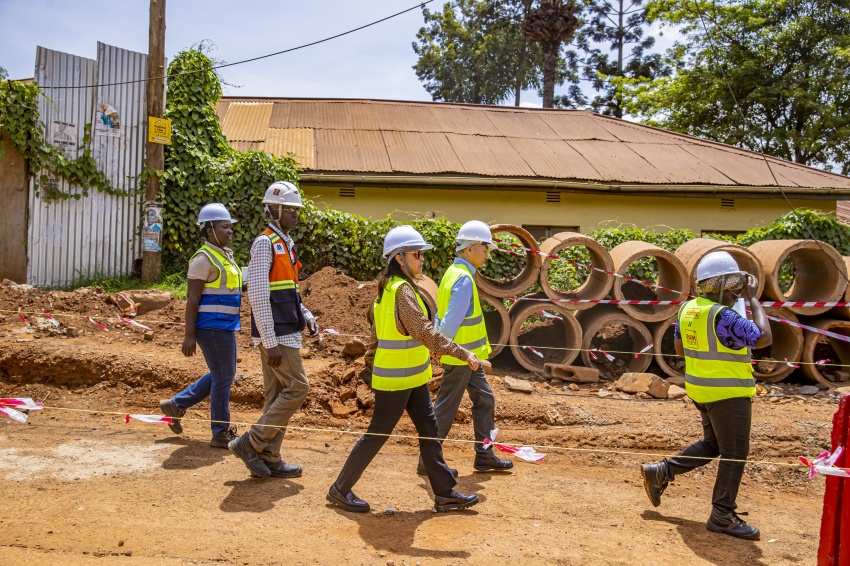
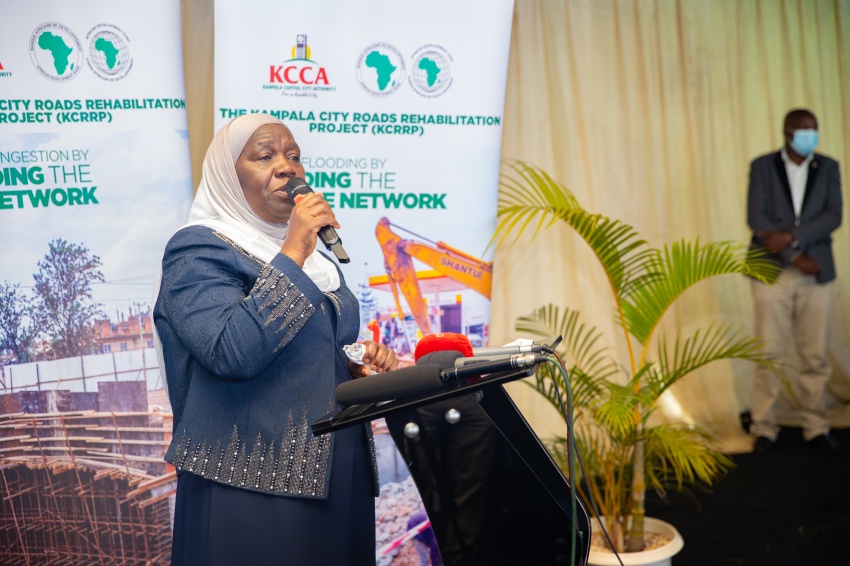
A senior delegation from the World Bank on Thursday toured key infrastructure sites in Kampala and held high-level talks with city leaders, reaffirming support for a major urban development program aimed at transforming mobility, drainage and economic opportunities across the city.
The delegation, led by Division Director Qimiao Fan and Uganda Country Manager Francisca Ayodeji Akala, met officials of the Kampala Capital City Authority at the Mayor’s Parlour on April 2 as part of an ongoing mission to assess progress under the Greater Kampala Metropolitan Area Urban Development Program (GKMA-UDP), funded jointly with the French Development Agency.
City leaders used the meeting to outline both progress and persistent infrastructure gaps in the fast-growing capital.
KCCA Deputy Executive Director Benon Kigenyi said Kampala has approximately 2,104 kilometers of roads, of which only about 770 kilometers are paved, leaving large sections of the city underserved.
“The areas you visited, like Old Kampala, have narrow and aging roads that can no longer match the city’s growth,” Kigenyi said, noting that at least 74.5 kilometers of roads will be upgraded under the GKMA-UDP. “This program will significantly transform how people move and do business in the city.”
He added that the project will also address critical gaps in workspaces, pointing out that Kampala’s 17 existing public markets are insufficient for the city’s growing population.
New and upgraded markets are planned in areas including Ggaba, Kamwokya and Usafi to expand workspace and support livelihoods.
Kigenyi emphasized the importance of integrating drainage systems into road construction, warning that without proper stormwater management, new infrastructure would deteriorate quickly.
“If we don’t manage drainage, the roads will not stand the test of time,” he said. “We are glad this program is prioritizing flood control.”
During the meeting, Fan praised KCCA’s leadership and acknowledged implementation challenges, including heavy traffic disruptions during construction.
“There will always be issues,” Fan said. “What matters is how they are managed.”
He urged city authorities to prioritize drainage infrastructure, strengthen road safety measures particularly behavioral change among road users and enforce regulations to curb encroachment as Kampala’s population expands.
“We will continue to support you and encourage you to accelerate implementation for the success of the project,” Fan said.
Minister for Kampala Capital City and Metropolitan Affairs Minsa Kabanda welcomed the financial and technical support from the World Bank, pledging government commitment to ensuring the project’s success.
“We are going to work hard to successfully implement this program and deliver its full impact,” Kabanda said.
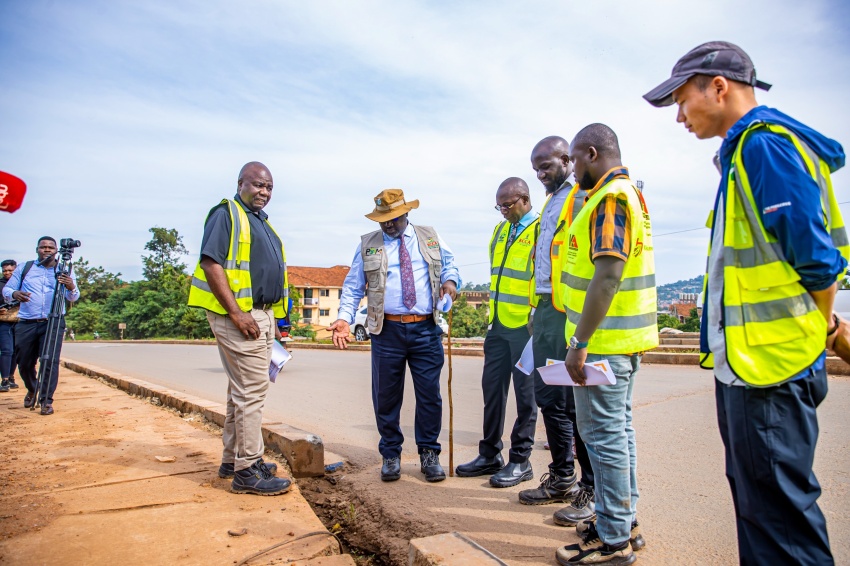
The delegation also conducted field visits across the city, including a drive-through along Nsambya Estate and Wavamuno roads, and inspections of ongoing works on Rashid Khamis, Old Kampala and Matia Mulumba roads. The team made a stop at Ggaba to assess the proposed site for a new market.
The GKMA-UDP extends beyond Kampala to the wider metropolitan area, covering Entebbe, Kira, Makindye-Ssabagabo, Mukono and Nansana, as well as surrounding districts.
Officials say the program aims to improve urban mobility through road upgrades, reduce flooding through enhanced drainage systems, create jobs through new workspaces and markets, and strengthen institutional capacity for coordinated urban planning.
If fully implemented, city authorities say, the project could reshape Greater Kampala into a more connected, resilient and economically vibrant metropolitan region.
By Geofrey Mutegeki Araali
Communication and Media Relations Officer
News & Announcements

29th, April 2026
28th, April 2026
28th, April 2026
25th, April 2026
18th, April 2026
18th, April 2026
17th, April 2026
17th, April 2026
16th, April 2026
15th, April 2026







Development partners